
Dive into the world of augmented reality and explore its endless possibilities. Learn how this cutting-edge technology is revolutionizing industries and our daily lives.
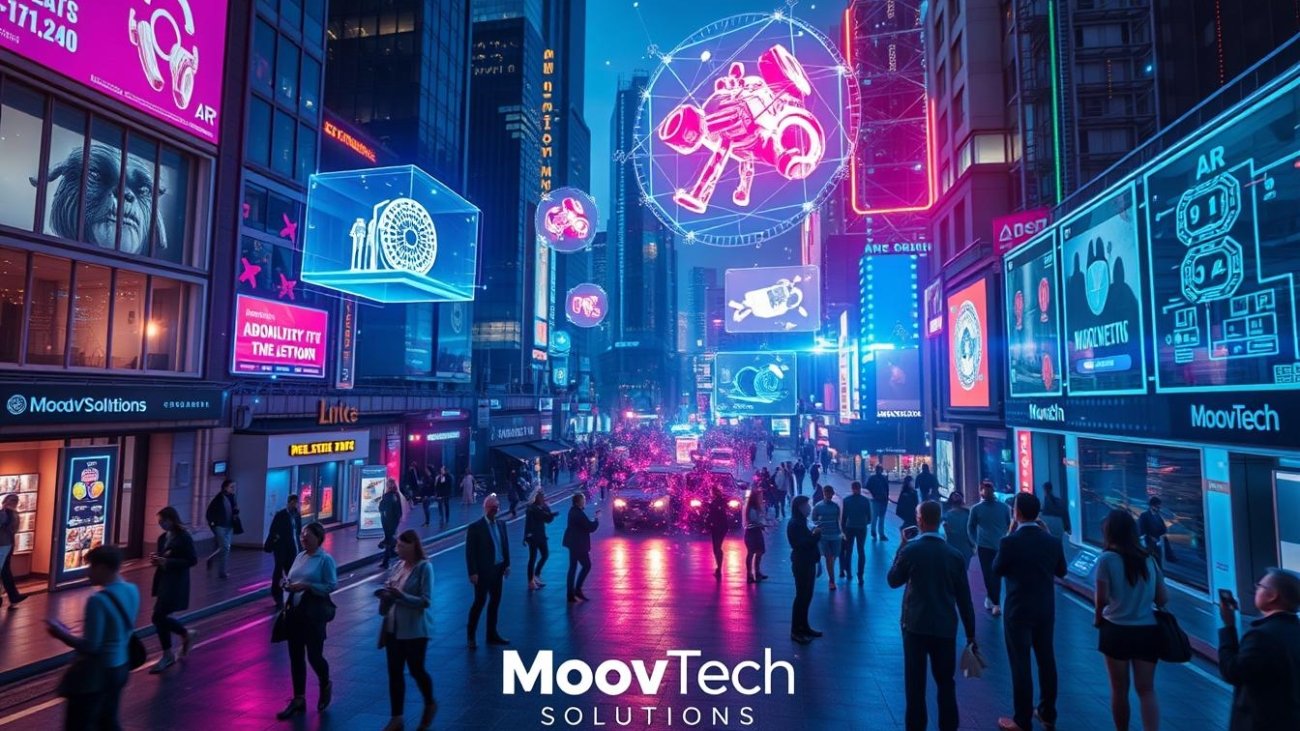
Dive into the world of augmented reality and explore its endless possibilities. Learn how this cutting-edge technology is revolutionizing industries and our daily lives.
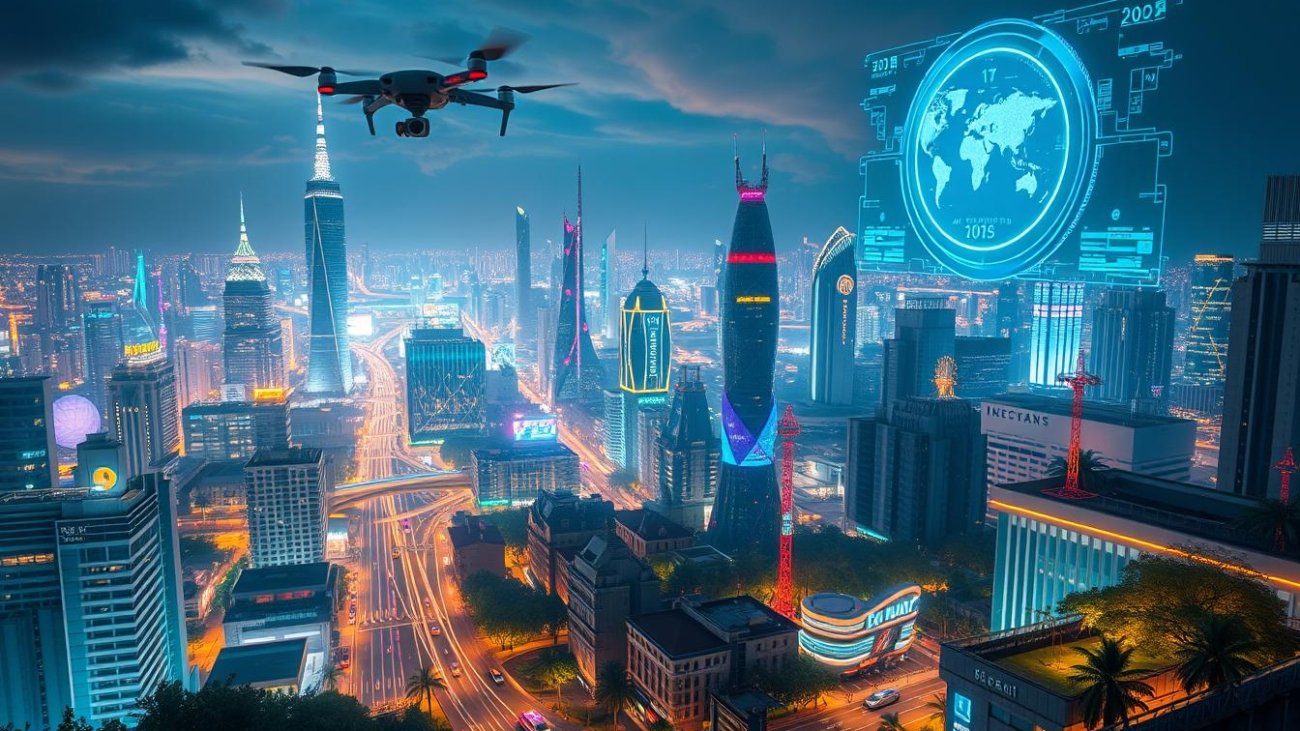
Artificial Intelligence (AI) is changing our lives in big ways. It’s making healthcare better and changing how we travel. This article will cover AI’s basics, its uses in many fields, and the ethics of its growth.
AI is making healthcare better by helping doctors and preventing diseases. It’s also changing finance, transportation, and manufacturing. We’ll see how AI is opening up new ways to solve problems.
We’ll also talk about AI’s challenges, like bias and transparency. This ensures AI grows in a fair and responsible way. By the end, you’ll know how AI is changing our world and what the future holds.
Artificial Intelligence (AI) is a fast-growing field in computer science. It aims to create systems that can do things humans do, like learn and solve problems. At its heart are machine learning and deep learning.
Machine learning lets computers learn from data and make choices on their own. They do this by looking at big datasets and finding patterns. This way, they get better over time. AI technology can automate tasks, make processes smoother, and help make better decisions.
Deep learning is a step up from machine learning. It uses artificial neural networks to handle complex data. These AI algorithms can do even harder tasks by understanding data in layers. This makes machines think and decide like humans. AI capabilities keep growing as deep learning gets better, leading to big changes in many fields.
| Machine Learning | Deep Learning |
|---|---|
| Learns from data to make predictions or decisions | Uses artificial neural networks to process complex data |
| Requires structured data and feature engineering | Can handle unstructured data and learn features automatically |
| Suitable for a wide range of applications | Excels in tasks requiring complex pattern recognition |
As AI definition and its tech keep getting better, we see huge changes in many areas. From healthcare to finance, and even in how we enjoy entertainment, AI is changing our world.
Artificial Intelligence (AI) is changing many industries, especially healthcare. In medicine, AI is making a big difference. It helps doctors diagnose diseases better, create treatment plans for each patient, and find new medicines.
AI can look through lots of medical data. It finds patterns and gives doctors insights to help patients get better.
AI is changing healthcare in big ways. It automates simple tasks and helps with complex surgeries. This makes patient care more efficient, personalized, and effective.
AI is leading to new ideas in AI-powered healthcare and AI-driven medical innovations. These changes make workflows smoother, reduce mistakes, and improve care for patients.
| AI Applications in Healthcare | Impact on Patient Care |
|---|---|
| Automated Diagnosis and Triage | Faster and more accurate identification of medical conditions, leading to earlier interventions and improved patient outcomes. |
| Personalized Treatment Plans | AI-powered analysis of patient data helps develop customized treatment approaches, maximizing the effectiveness of therapies. |
| Robotic-Assisted Surgery | AI-guided surgical robots enhance precision and dexterity, resulting in less invasive procedures and faster recovery times. |

As AI in healthcare grows, its impact on patient care will get even bigger. Doctors are starting to use these AI-powered healthcare tools. They see the huge potential of AI-driven medical innovations to change the industry and help patients.
The field of AI capabilities is growing fast, opening up amazing possibilities in many areas. AI-powered innovations are making things that were once science fiction a reality. They are changing how we live, work, and use technology.
AI is bringing us smart personal assistants that know what we need. It also helps make complex decisions easier. This technology is helping us solve problems better than ever before. It has the power to change many industries, like healthcare and transportation.
In robotics, AI is making advanced systems that can move, see, and talk to their surroundings. These AI future applications are leading to big changes in disaster response, space exploration, and making things.
“AI is not just a technology, but a catalyst for change that is reshaping our world in profound ways.”
As we keep using AI, the future looks very promising. It will make our lives better and open up new scientific discoveries. This technology is set to change what we think is possible.

AI is changing our world fast, and we must tackle the big ethical issues it brings. Problems like bias in AI, unclear AI decisions, and AI making things worse for some groups are big concerns. These issues are becoming more common.
AI can sometimes make choices based on unfair biases. These biases can come from the data used to train AI or from the developers themselves. We need strong ways to check AI systems for fairness and to make sure they’re clear about their decisions.
Being open about how AI works is also key. It helps build trust and makes sure we’re all responsible for AI’s actions. Rules and standards for AI transparency and explainability are important for making sure AI is used right.
Artificial Intelligence (AI) is a field of computer science. It aims to create systems that can do things humans do, like learn and solve problems.
AI uses two main ideas: machine learning and deep learning. Machine learning lets computers learn from data and make decisions. Deep learning is more advanced, using artificial neural networks to handle complex data.
AI is changing healthcare by improving disease diagnosis and treatment plans. It analyzes medical data to help doctors make better decisions. AI also automates tasks and helps in surgeries, making care more efficient and effective.
AI is opening up new possibilities in many areas. It’s leading to breakthroughs in robotics, language processing, and more. The future looks bright as AI continues to evolve and change our world.
AI’s growth brings both promise and challenges. Issues like bias and lack of transparency are important. We must address these to ensure AI benefits everyone fairly and safely.
In the fast-evolving landscape of AI video generation, a new player is shaking things up. Luma AI, a San Francisco-based startup, has just announced its latest breakthrough – the Dream Machine API. This development follows hot on the heels of Runway’s own API announcement, adding fuel to an already heated AI video technology race.
Luma AI’s new API is designed to make its Dream Machine model, already a hit among video creators, accessible to developers, startups, and enterprise teams alike. This is more than just a technical upgrade — it signals a major shift in how AI video tools can be used across industries, providing greater flexibility and creative control to users.
The Dream Machine API allows users to integrate Luma AI’s video generation capabilities into their own applications, systems, or workflows. This could mean incorporating AI-generated videos into marketing tools, mobile apps, websites, or even entirely new platforms. Before the API launch, Dream Machine was only accessible via Luma’s website. Now, with the API, you can harness its power directly into your projects.
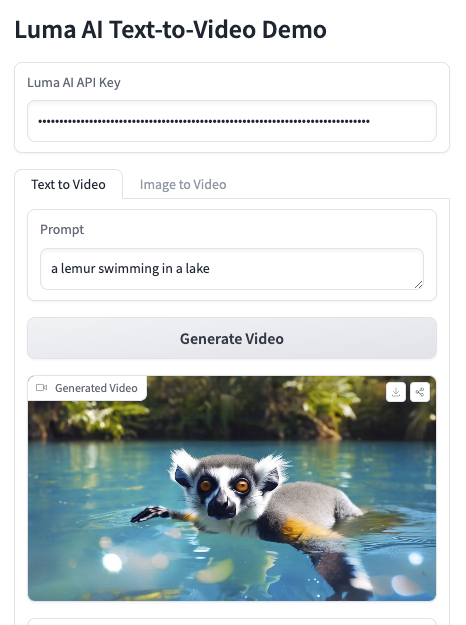
Runway, a notable rival, launched its own API a few hours before Luma AI, but Luma’s API is already live and available for developers to use. Early adopters like Hugging Face have even implemented a demo version, showcasing its ease of use and impressive results. But what makes Luma AI’s Dream Machine API a standout in the competitive landscape of AI video technology? Let’s dive into its features.
One of the most powerful capabilities of the Dream Machine API is its Text-to-Video feature. Simply provide a text prompt, and Dream Machine will generate a video based on that input. Forget the complex art of prompt engineering — this API simplifies the process, allowing anyone to create stunning videos by typing a few lines. For instance, a marketing team could describe a product launch, and Dream Machine would generate an engaging promotional video.
Many industries, from e-commerce to advertising, will find this tool particularly transformative. Read how AI video technology can revolutionize marketing campaigns with this feature alone.
With the Image-to-Video function, static images can be turned into fluid animations. This feature is ideal for teams looking to create explainer videos, visual presentations, or eye-catching social media content. Imagine uploading a product photo and watching it come to life with smooth animations, all through the power of AI video tools.
This is especially useful for businesses that rely heavily on visuals but lack the resources for professional video production. Discover how visual storytelling can boost brand engagement.
Unlike many other video generation tools, Luma’s API gives developers control over keyframes. You can define start and end frames, which means the AI can follow a precise narrative or visual flow. This feature is perfect for video creators who need more control over transitions and scene direction.
Developers and content creators will appreciate this flexibility, as it allows them to maintain creative ownership over the final product. Learn more about creative control in AI-generated media.
The Dream Machine API enables users to extend videos or create seamless loops. This is particularly useful for UI/UX designers who need smooth background animations or marketers who want to create continuous visual loops for social media ads. It opens up endless possibilities for dynamic content that keeps audiences engaged.
Check out examples of how AI video loops are being used in UI design and branding in this in-depth blog post.
A standout feature of the Dream Machine API is the ability to control camera motion through text commands. Developers can adjust the perspective and movement of the video, creating a cinematic experience without any manual editing. This level of control makes it possible to produce professional-grade content that aligns with specific visual narratives.
Explore how camera motion can change the storytelling game.
Luma AI has considered the demands of modern content creators by offering variable aspect ratios. This means the API can automatically optimize videos for platforms like Instagram, YouTube, or TikTok, reducing the need for manual resizing or reformatting. For brands and creators juggling multiple platforms, this is a game-changer.
Discover how aspect ratios can make or break your video content.
One of the core missions of Luma AI is to democratize access to high-quality AI video tools. The API is priced at $0.32 per million pixels generated, which comes to about $0.35 for a 5-second video at 720p resolution. This pricing is highly competitive, making the platform accessible even to smaller developers and startups.
However, without public pricing details from Runway, it’s hard to compare the two models. That said, Luma’s pricing structure ensures that innovation isn’t reserved for large enterprises. Read about how Luma AI is leveling the playing field.
While the API is open to all, Luma AI offers a “Scale” option for larger companies and organizations. This option includes higher rate limits and dedicated onboarding and engineering support. This feature is designed to meet the demands of enterprise-level video projects and high-volume use cases.
For businesses looking to scale their AI video generation, this tailored support ensures smoother integration and more robust performance. See how enterprises are scaling their AI capabilities.
Luma AI emphasizes responsible use of its technology, employing multi-layered moderation that combines AI filtering with human oversight. Developers can adjust moderation settings to fit the legal and ethical standards of their respective industries.
Privacy is also a priority. Luma ensures that inputs and outputs are not used to retrain its models unless users explicitly grant permission. This helps protect intellectual property and reduces the risk of misuse. Dive into the ethics of AI in video creation.
Luma AI’s Dream Machine API is the latest in a string of developments aimed at making AI video tools more accessible, flexible, and powerful. This new API marks a significant step forward for content creators, marketers, and developers looking to harness the power of AI for video production.
With competition from the likes of Adobe’s Firefly Video AI and Runway, the future of AI video technology looks incredibly promising. As companies race to innovate, the tools available to both small businesses and large enterprises are only getting more sophisticated. Learn how AI is shaping the future of video creation.
In summary, Luma AI’s Dream Machine API is poised to revolutionize the world of AI video generation. From text-to-video functionality to camera motion control, the features are designed to offer unparalleled creative flexibility. Whether you’re a solo developer or part of a large enterprise, the Dream Machine API opens up new frontiers in video creation — with ease, affordability, and scalability.
Ready to start creating? Dive into the world of AI video tools today and see how the Dream Machine API can transform your projects!